
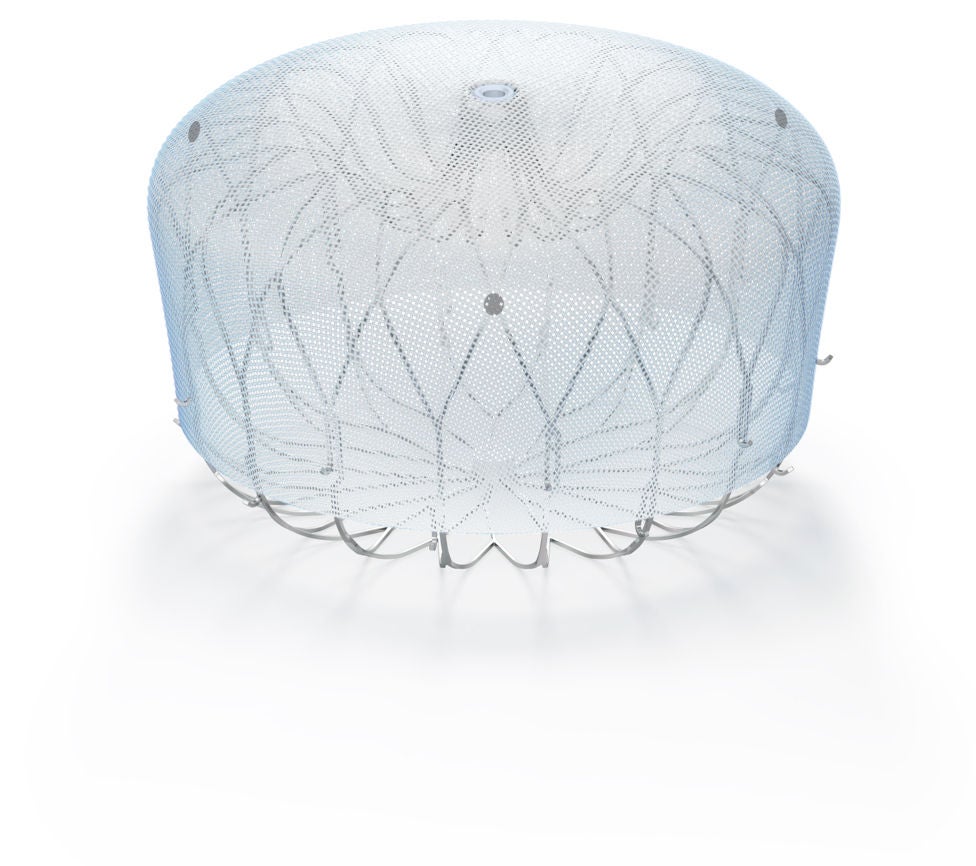
The WATCHMAN Implant is the one-time, minimally invasive procedure that protects your AFib patients for life – without the bleeding risk associated with OACs.
You can make a difference for your eligible patients.
You know how much your patients with atrial fibrillation (AFib) worry about bleeding and the risk of stroke. You may also know that oral anticoagulants (OACs) aren’t a good fit for everyone. Offer the WATCHMAN™ Left Atrial Appendage Closure Implant to your patients who need an alternative to OACs.
The WATCHMAN Implant is the one-time, minimally invasive procedure that protects your AFib patients for life – without the bleeding risk associated with OACs.
You can make a difference for your eligible patients.


FDA approved
patients treated
clinical experience

implant success rate*
major adverse event rate†

of patients discontinued OACs at 45 days
The limitations Brenda experienced while on OACs made it difficult for her to live her active lifestyle to the fullest. The WATCHMAN LAAC Implant was the ideal solution for Brenda and her AFib journey.
See how other health care professionals proactively talk with their patients about WATCHMAN in this quick video.
ACC, HRS and SCAI recognize the following example scenarios that support alternatives to long-term oral anticoagulation (OAC).3-5

Patients who have a history of major or minor bleeding episodes

Patient's occupation or activities increase their risk of falling or bleeding
Patient takes other medications beyond OACs that increase bleeding risk
Patient has an increased bleeding risk not reflected by the HAS-BLED score or other factors caused by side effects of OACs

Patient has a history of stroke due to:
Poor compliance with OAC therapy
Inability to maintain internal normalized ratio (INR)
Note: This is not an exhaustive list. For a fill list of example scenarios mentioned in the 2015 Consensus memorandum submitted on the proposed NCD during the process of establishing CMS coverage for LAAC, see here.
The WATCHMAN Implant may be suitable for a broad range of non-valvular AFib (NVAF) patients and may be appropriate for those who:
Try this eligibility screener and risk score calculator to determine whether your AFib patients are eligible for a WATCHMAN Implant.
Patient Ambassadors are people who have received the WATCHMAN Implant and have volunteered to share their personal experiences with potential patients.
Designed just for patients, this website explains how the WATCHMAN Implant works, offers a quick quiz about eligibility, explains cost information, and more.
* Procedure success defined as successful delivery and release of a WATCHMAN FLX device into the LAA.
† Occurrence of one of the following events between the time of implant and within 7 days following the procedure or by hospital discharge, whichever is later: all-cause death, ischemic stroke, systemic embolism, or device or procedure related events requiring open cardiac surgery or major endovascular intervention.
‡ Increased Risk = CHA₂DS₂-VASc ≥ 2 in men, ≥ 3 in women. CMS coverage criteria requires a CHA₂DS₂-VASc score ≥ 3. Providers are encouraged to read the decision memo in its entirety for additional detail.
** Option for immediate DAPT-only post-implant drug regimen for standalone WATCHMAN procedures.
§ In the OPTION trial, sequential LAAC was a minimum of 90 days post AFib ablation (as a protocol-driven blanking period).
References:
1. Represents all WATCHMAN models.
2. Kar S, Doshi SK, Sadhu A, et al. Primary outcome evaluation of a next-generation left atrial appendage closure device: Results from the PINNACLE FLX Trial. Circulation. 2021;143:1754–1762.
3. 2015 Consensus public comment submitted on the proposed NCD during the process of establishing CMS coverage for LAAC. https://www.cms.gov/medicare-coverage-database/view/ncacal-decision-memo.aspx?proposed=N&NCAId=281&bc=AAAAAAAAQAAA&%20
4. Documentation supporting medical necessity is required for coverage.
5. Blankenship J, et al., ACC/HRS/SCAI National Coverage Determination Memorandum to CMS, December 2015.