
Long-term oral anticoagulant (OAC) therapy may be considered a standard of care for patients with non-valvular atrial fibrillation (AFib), but it comes with risks and consequences that can affect quality of life. These can include bleeding, fall and trauma risk in aging patients, non-adherence, stroke risks, drug interactions, lifestyle or diet restrictions, and medical and pharmacy costs.
The WATCHMAN FLX™ Pro Left Atrial Appendage Closure (LAAC) Device offers a one-time, minimally invasive procedure for long-term stroke protection without the complications associated with OACs. With WATCHMAN, you have a modern, empowering alternative to break the pattern of reliance on OACs and lead the way in stroke protection for more patients.

Daily burdens of OACs are affecting patient quality of life
While OACs help protect against stroke, the reality for patients is that they experience daily burdens and risks, which can also lead to anxiety and fear.
BLEEDING RISK
WATCHMAN patients experienced a 34% reduction in total ISTH bleeding (including procedural) vs. NOACs at 3 years1
ADHERENCE RISK
DOAC adherence below 80% may increase stroke risk by 64%2
RISK OF STROKE
WATCHMAN showed comparable stroke protection to OACs across 7 randomized trials and >7,000 patients3
RISK OF COMPLICATIONS
AFib patients taking 5 or more medications* have a 33% higher chance of heart failure4
*55% of AFib patients are on 5 or more medications.
FALL RISK
Patients with prior falls face 81% higher major bleeding risk and are at higher risk of OAC discontinuation*5
*Falls are the most common type of accidents in people age 65 and older.
PATIENTS WANT ANOTHER OPTION
55% of AFib patients would rather not take blood thinners due to bleeding risk6
WATCHMAN LAAC Device: Peace of mind for patients with AFib
As the most studied LAAC device in the world, WATCHMAN LAAC Device has been proven to be an effective, one-time alternative so you can move more patients off long-term OACs with procedural confidence and long-term safety. Protection against stroke risk. Protection against OAC risks and challenges. The WATCHMAN LAAC Device protects your AFib patients for life.
- FDA-approved
- Backed by robust clinical data
- Eliminates the ongoing bleeding and adherence risks of OAC therapy
- Provides comparable stroke protection with reduced bleeding risk
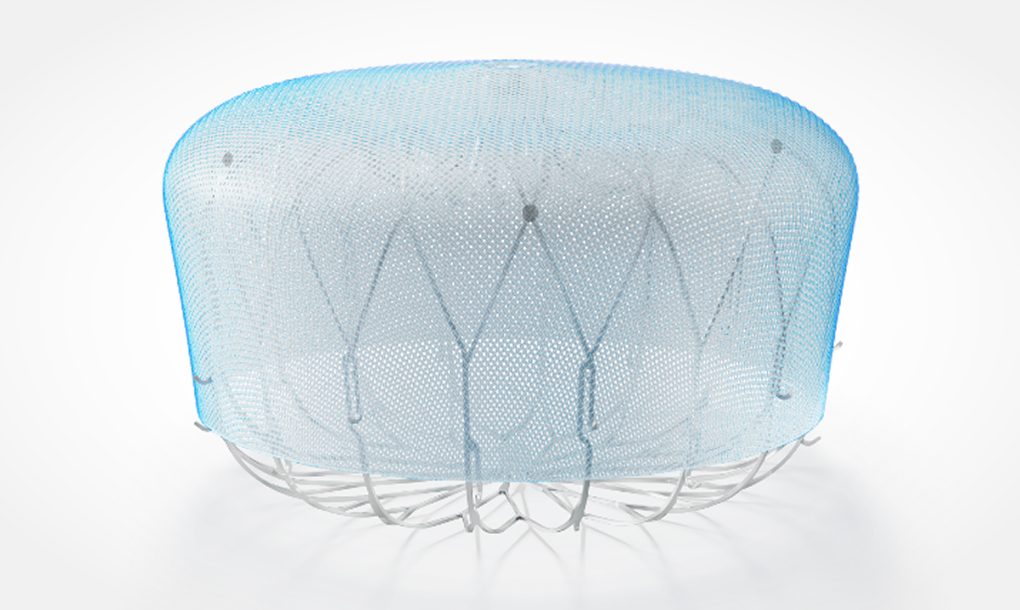
Implanted in over 600,000 patients worldwide
WATCHMAN is indicated for a broad range of patient types
The WATCHMAN Device may be an appropriate solution for your patients who meet these criteria:
Note: Clinical trial results informed recent labeling updates.
†Updated specific post implant drug regimen options.
*Does not apply to patients who receive the WATCHMAN Implant concomitantly or sequentially with an AFib ablation; however, CMS coverage criteria (NCD 20.34) remain unchanged at this time. Commercial payer coverage policies vary.
The 2023 ACC/AHA/ACCP/HRS Guidelines for the Diagnosis and Management of Atrial Fibrillation consider left atrial appendage occlusion (LAAO) devices a 2a Class of Recommendation for patients with a contraindication to long-term OACs and a 2b Class of Recommendation based on patient preference for those considered at high risk of bleeding and may prefer a non-pharmacologic alternative.
Consider WATCHMAN for patients who need stroke protection but have a documented bleed risk, fall risk, or challenges with long-term anticoagulation.*
*Documentation supporting medical necessity is required for coverage.






Contemporary Meta-analysis of LAAC vs. OAC
A new meta-analysis of 7 randomized trials eventuating >7,000 patients with approximately 3 years of follow up found that LAAC demonstrated comparable protection from stroke/systemic embolism and a 40% reduction in clinically significant bleeding, including procedural events, compared to OACs.3
These findings reinforce the strength of the WATCHMAN evidence base and support LAAC as an evidence-based alternative to long-term OAC for appropriate patients.
Annualized Ischemic Stroke Rate for Untreated AF Patients with CHA2DS2-VASc 3.9 vs Patients Receiving LAAC or NOACs
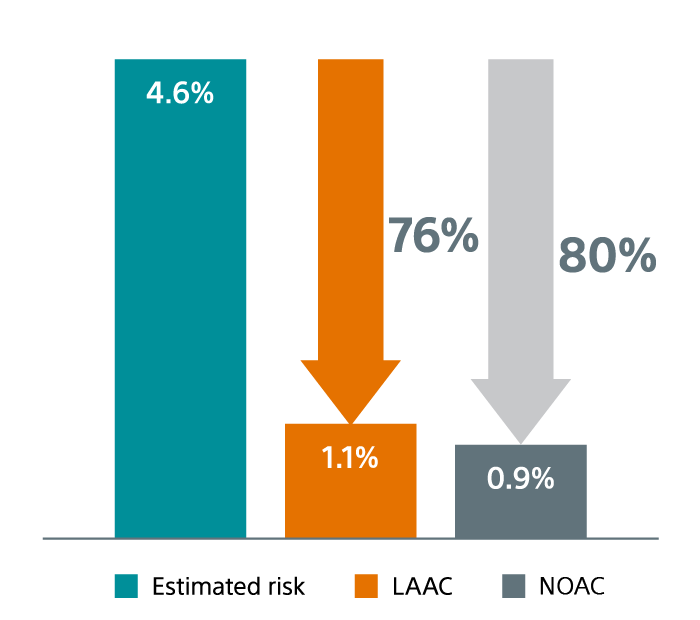
Relative reduction in clinically significant bleeding
(including procedural)
0.60 (0.36-0.98)

Protect Your Patients
Hear cardiologists discuss WATCHMAN as a safe OAC alternative for stroke risk reduction.
Miguel’s story
Watch Miguel’s success story and hear from physicians who treated him.
Learn more about OAC risks and WATCHMAN


References
- SK Doshi et al. Left Atrial Appendage Closure or Anticoagulation for Atrial Fibrillation. New England Journal of Medicine, March 2026
- Grymonprez M, Steurbaut S, Capiau A, et al. Minimal adherence threshold to non-vitamin k antagonist oral anticoagulants in patients with atrial fibrillation to reduce the risk of thromboembolism and death: a nationwide cohort study. Cardiovasc Drugs Ther. 2025;39(1):107-117. doi:10.1007/s10557-023-07507-3
- Turagam MK et al. Left Atrial Appendage Closure vs Anticoagulation for Stroke Prevention in Atrial Fibrillation: Meta-Analysis of Randomized Trials. JACC: Clinical Electrophysiology, July 2026.
- Chen N et al. Polypharmacy, Adverse Outcomes, and Treatment Effectiveness in Patients ≥75 With Atrial Fibrillation. JAHA, May 2020
- Romiti GF, Corica B, Bucci T, et al.; on behalf of the GLORIA-AF Investigators. History of falls in patients with atrial fibrillation and risk of major outcomes: analysis from the Prospective GLORIA-AF Registry. GeroScience. 2025. doi:10.1007/s11357-025-01852-x.
- Salmasi S., Loewen P.S., Tandun R., Andrade J.G., Vera M.A.D. Adherence to oral anticoagulants among patients with atrial fibrillation: a systematic review and meta-analysis of observational studies. BMJ Open. 2020;10 doi: 10.1136/bmjopen-2019-034778
- Wazni OM, Saliba WI, Nair DG, et al. Left atrial appendage closure after ablation for atrial fibrillation. N Engl J Med. 2025;392(13):1277-1287. doi: 10.1056/NEJMoa2408308