

As Left Atrial Appendage Closure (LAAC) becomes more widely considered as an alternative for atrial fibrillation (AFib) patients to lifelong oral anticoagulation treatment, these tools and resources will help you to establish which of your patients could benefit from the WATCHMANᵀᴹ Implant.

Designed to treat a broad range of patients
PAST BLEED

A major or minor bleeding episode
And if Increased risk of future bleeds
- Due to work or activities that increase risk of falling or bleeding
- Caused by other medications that increase bleeding risk
- Caused by side effects of OACs,such as bleeding risk based on HAS-BLED score or other factors
INCREASED RISK OF STROKE

A minor or disabling past stroke event
With history of stroke due to:
- Non-compliance
- Inability to maintain internal normalized ratio (INR)
See examples of patients who may be appropriate WATCHMANTM candidates
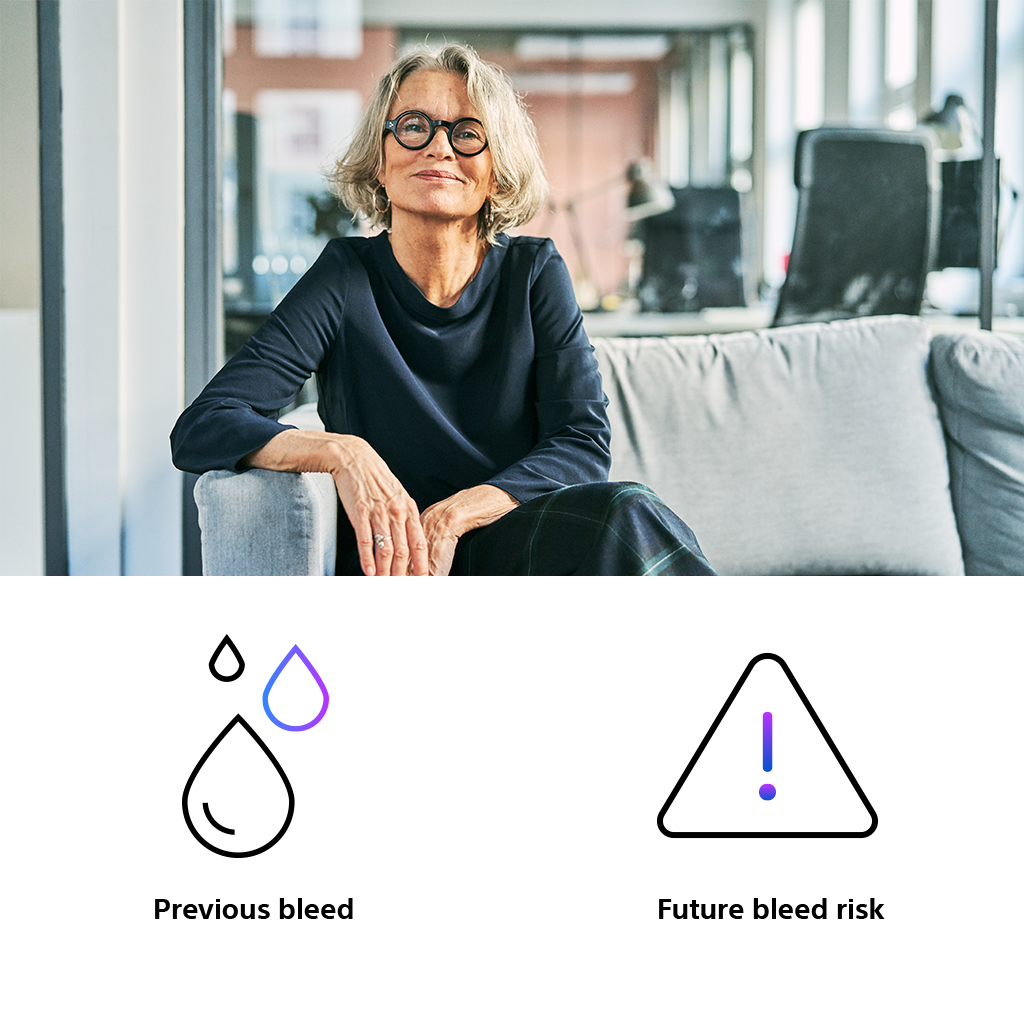
Patient history
- 75F
- Patient has prediabetes, paroxysmal AFib, hypertension, CHA2DS2-VASc: 6-7, HAS-BLED: 4
- Year 1: Diagnosed with AFib, started apixaban 5 mg, twice a day
- Year 2: AFib ablation
- Early Year 3:
- Foot drop→ First hemorrhagic stroke
- CT scan found a hemorrhagic lesion
- Apixaban discontinued
- Late Year 3: Headache, loss of balance →Second hemorrhagic stroke in same vascular bed
– During hospitalization, patient had pulmonary embolism (PE) and had an IVC filter (could not get anticoagulation due to recent hemorrhagic stroke)
Patient criteria and therapy decision
Patient meets the criteria for having had a previous bleed, in this case a major bleed, and was deemed suitable for post-implant dual antiplatelet therapy (DAPT) by an interdisciplinary care team. Therefore, this patient should be considered for WATCHMAN™.
Clinical Challenge
Patient is at risk for stroke, has had a major bleeding event more than once and will not be able to withstand long-term systemic anticoagulation.
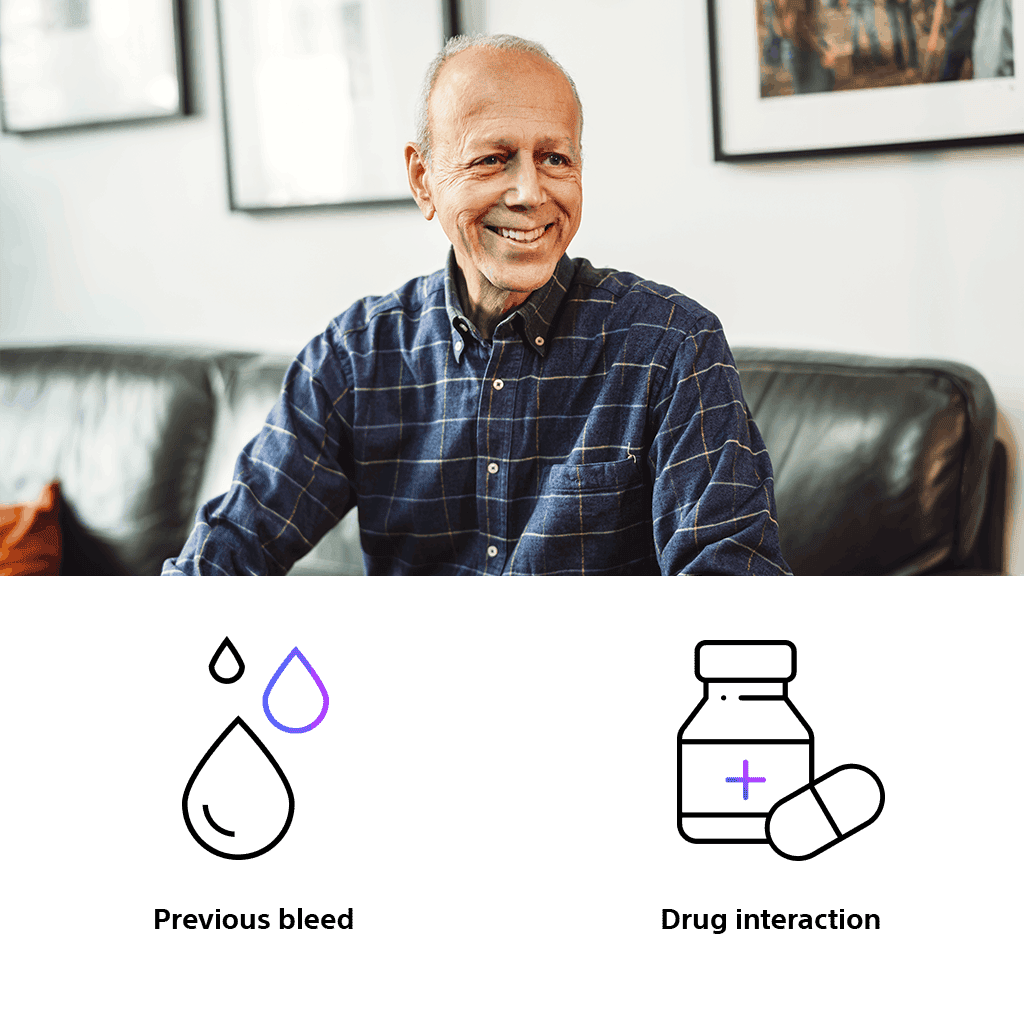
Patient history
- 65M
- Patient has AFib, atherosclerotic cardiovascular disease (ASCVD) (carotid,coronary, peripheral artery disease), hypertension, obstructive sleep apnea on CPAP and an aortic aneurism who presents for follow up of more frequent palpitations.
- Holter Monitor: ~20% burden of AF/AFL, longest episode duration of 12 hours and 22 min, fastest heart rate 169 bpm. Patient events correlated with mostly AF/AFL.
- Meets indication for "secondary" prevention ASA 81 mg given multiple vascular beds with ASCVD.
- Patient had severe epistaxis last year on apixaban requiring multiple blood transfusions. He is currently not on anticoagulation because of this.
Patient criteria and therapy decision
Patient has a history of minor bleeding and comorbidities that require treatments that may not be compatible with OAC
Patient can be considered for WATCHMAN™ based on bleeding history and clinical risk factors
Clinical Challenge
Patient has concomitant medications and has had a minor bleed that could be considered significant because of the transfusions required. He should not be rechallenged with another anticoagulant, or discontinue aspirin, because of his vascular disease.

Patient history
- 75M
- Patient has chronic, persistent AFib (CHA2DS2-VASc=7), prior cerebrovascularaccident (CVA), diabetes, coronary artery disease (CAD) after silent myocardialinfarction (MI).
- Had a CVA when he was off OACs for ENT surgery five years ago
- Frequent falls
Patient criteria and therapy decision
The patient has frequent falls, low time in therapeutic range, is considered at high risk for future bleeds and is appropriate to consider for WATCHMAN™.
Clinical Challenge
Patient has a history of falls
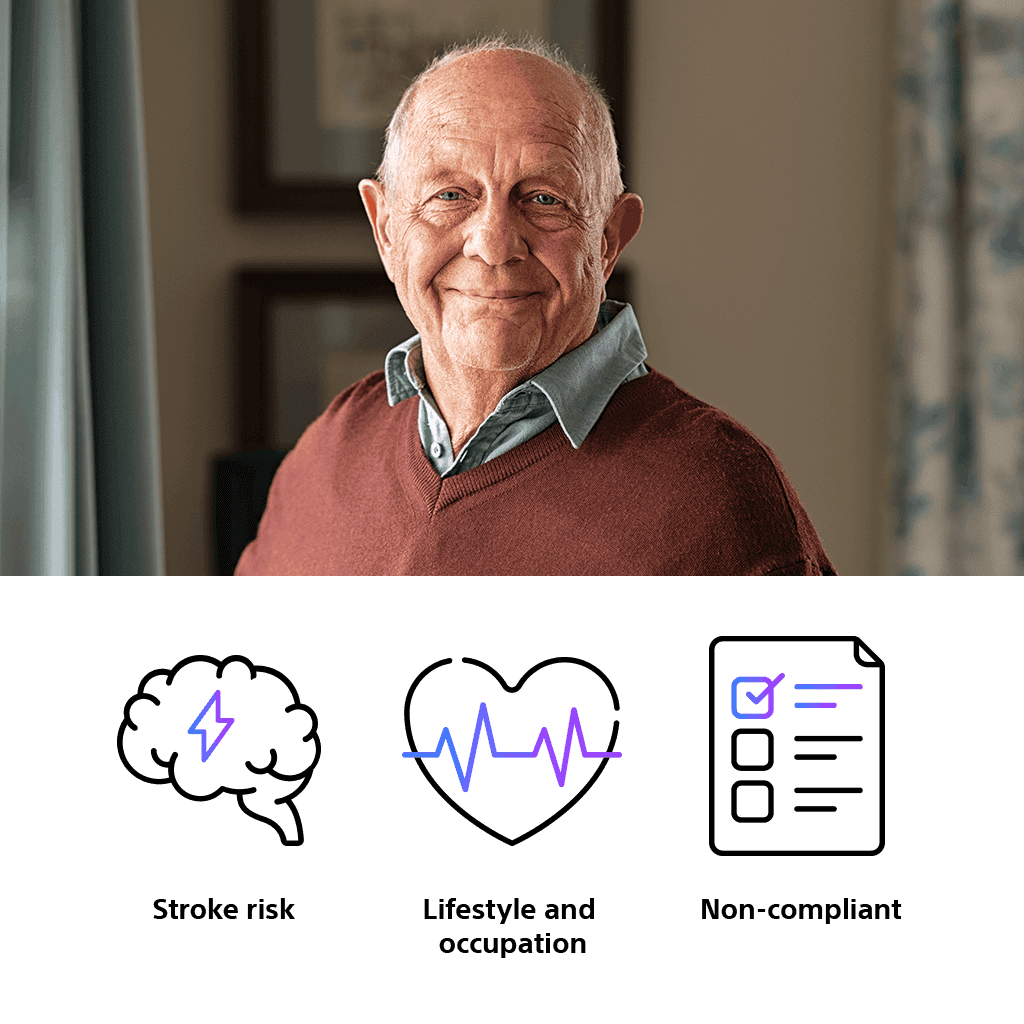
Patient history
- 77M
- Cigar smoker with history of mucosa-associated lymphoid tissue (MALT),prediabetes, hypertension (HTN), AFib on flecainide, sleep apnea, remotegastrointestinal bleeding, s/p implantable loop recorder (ILR) and GERD, presents for evaluation of post-COVID shortness of breath.
- Only taking ASA 325 mg
- CHA2DS2-VASc=4 (Age, HTN, non-obstructive coronary artery disease (CAD))
- Meets criteria for OAC, but declines.
Patient criteria and therapy decision
This patient struggles with OAC compliance but is at risk for stroke and is therefore appropriate to consider for WATCHMAN™
Clinical Challenge
Patient is at risk for stroke but declines OAC
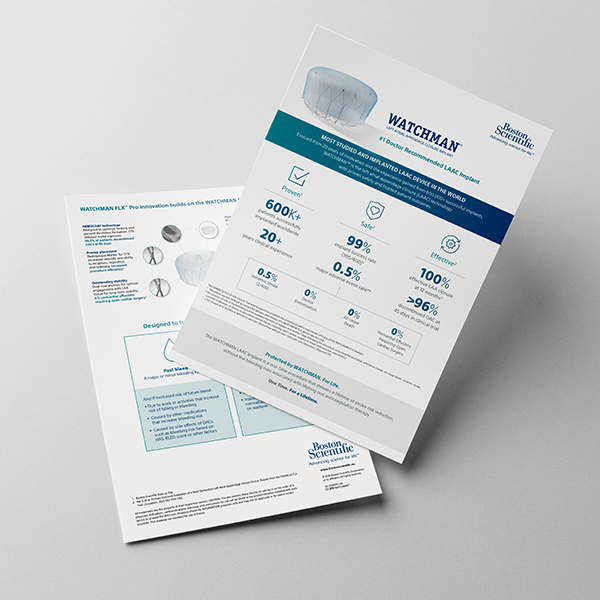
Downloadable clinician resources for offline use
Here you find downloadable resources that will help you to support your Afib patients in their disease journey.
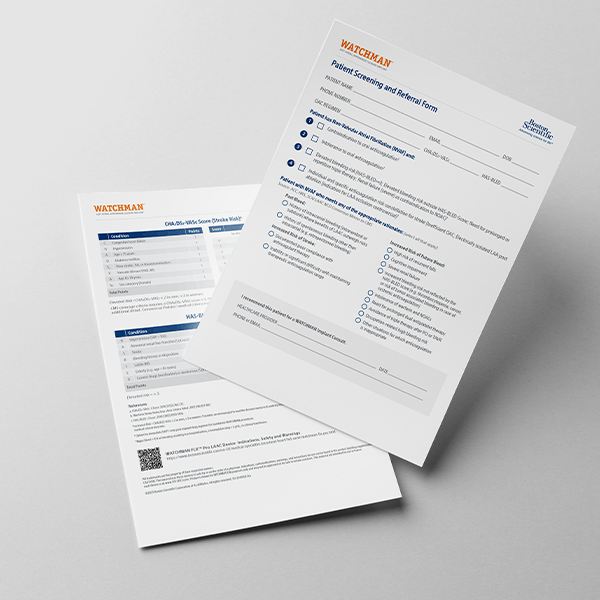


Access patient resources
Patients will have different information needs than yourself. This is why we developed resources that are specifically meant for your patients to get them informed about WATCHMAN™ in LAA Closure.


References
*Increased Risk = CHA₂DS₂-VASc ≥ 2 in men, ≥ 3 in women. CMS coverage criteria requires a CHA₂DS₂-VASc score ≥ 3. Providers are encouraged to read thedecision memo in its entirety for additional detail
†Option for immediate DAPT-only post-implant drug regimen for standalone WATCHMAN procedures.
**In the OPTION trial, sequential LAAC was a minimum of 90 days post AFib ablation (as a protocol-driven blanking period).
CAUTION: The law restricts these devices to sale by or on the order of a physician. Indications, contraindications, warnings, and instructions for use can be found in the product labelling supplied with each device. Products shown for INFORMATION purposes only and may not be approved or for sale in certain countries. This material not intended for use in France.